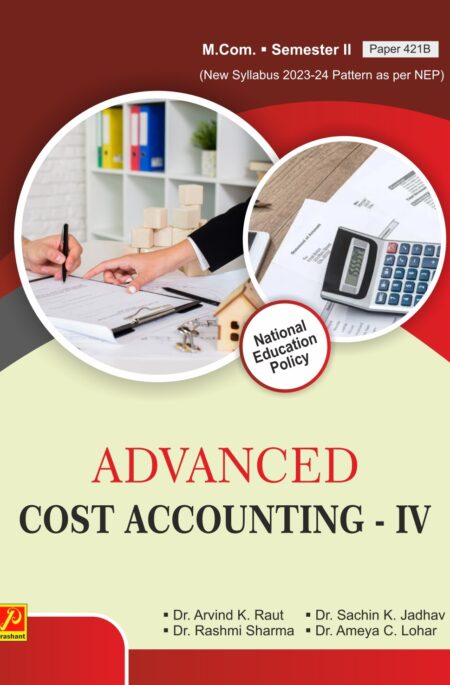

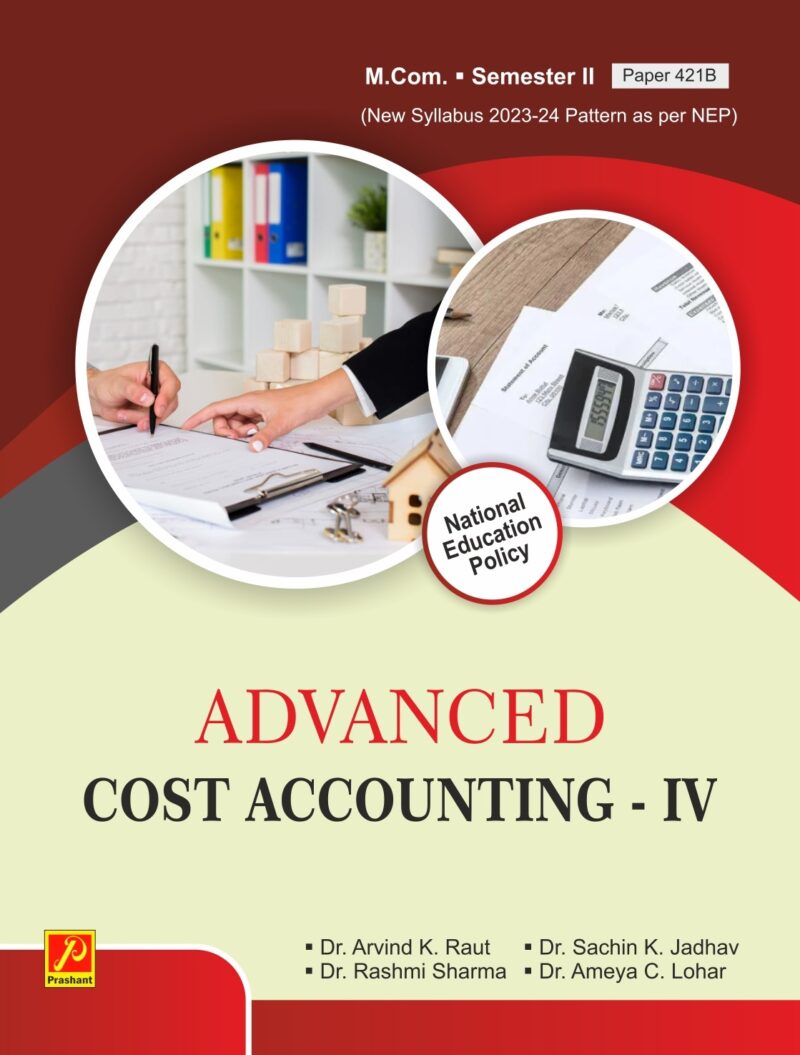
- DESCRIPTION
- INDEX
1. Non-Integrated Cost Accounts …………………………………………………………………7
1.1 Books of Accounts in Cost Accounting.
1.2 Books of Original Entry.
1.3 Various Subsidiary Ledgers.
1.4 Purpose of Control Accounts – their nature and procedures of posting from subsidiary
ledgers to control accounts.
1.5 Double-entry Accounting System as used in cost accounts.
1.6 Passing journal of entries, and preparation of ledger control accounts from a given set of transactions.
2. Integrated Accounts / Integral Accounts…………………………………………………….57
2.1 Meaning and Nature of Integrated accounts.
2.2 Necessity of Preparing Integrated accounts.
2.3 Process followed in preparation of Integral accounts.
2.4 Double-entry Accounting System as used in integrated accounts.
2.5 Passing journal of entries and preparation of ledger control accounts from a given set of transactions.
3. Reconciliation of Profits under Cost Accounts and
under Financial Account…………………………………………………………………………93
3.1 Introduction.
3.2 Need for Reconciliation.
3.3 Procedure of Preparing Reconciliation.
3.4 Proforma Reconciliation Statement.
3.5 Memorandum Reconciliation Account.
3.6 Reasons for disagreement between Profits as per financial accounting and Profits as per cost accounting.
3.7 Problems with Solution.
4. Accounting Standards…………………………………………………………………………..138
4.1 Cost Information Needs at Different Levels of Management.
4.2 Requisites of An Effective Information System.
4.3 Forms of Presentation – various reports – graphs, charts, tables and diagrams.
5. Uniform Costing and Inter-firm Comparison………………………………………..187
5.1 Meaning of Uniform Costing.
5.2 Reasons for Differences in Costs and Costing.
5.3 Practices from firm to firm, Application of Uniform Costing System.
5.4 Objectives, Advantages and Limitations of Uniform Costing System.
5.5 Essentials for success of Uniform Costing System, Fields for Uniformity, Uniform Cost Manual.
5.6 Inter-firm Comparison – Meaning, Objectives.
5.7 Advantages and Limitations of Inter-firm Comparison – is it the same as that of comparative statements.
6. Introduction to Cost Accounting Record Rules and Cost Audit
Companies (Cost Records and Audit) Rules, 2014………………………………….214
6.1 Concepts of Cost Accountant in practice, Cost auditor, Cost Audit Report, Cost Records.
6.2 Application of Cost Records – Provisions pertaining to inclusion of cost records in the books of accounts.
6.3 Categories of Companies Required to Maintain Cost Records.
6.4 Provisions Pertaining to Manner of Maintenance of Cost Records.
6.5 Applicability for Cost Audit – Provisions Pertaining to Getting the Cost Records Audited.
Author

Related products
-
Cost Accounting
Rs.115.00 -
Advanced Accounting – III
Rs.275.00 -
Advanced Accountancy – I
Rs.275.00 -
Advanced Accountancy – II
Rs.295.00