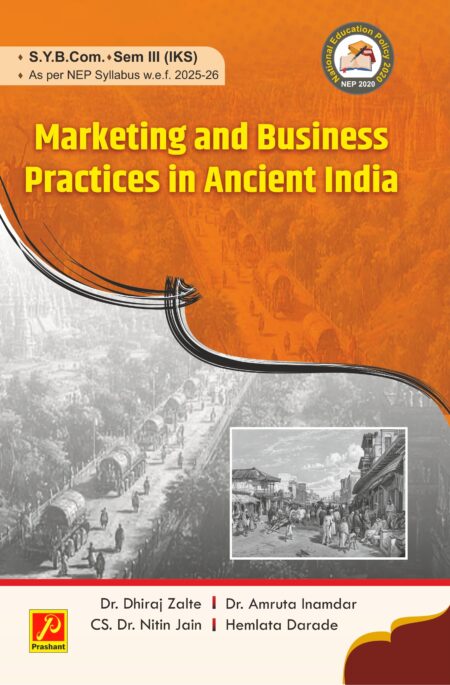

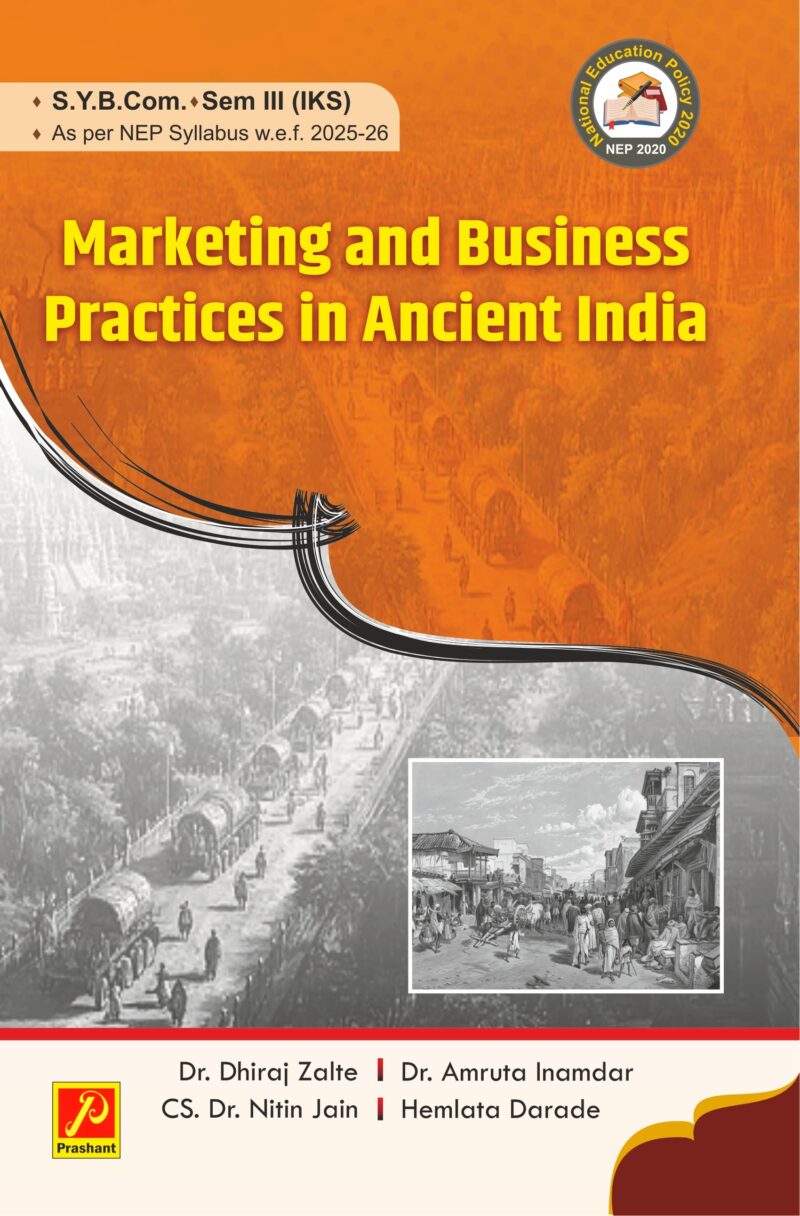
- DESCRIPTION
- INDEX
1. Marketing Practices in Ancient India…………………………….11
1.1. Concept and Evolution of Marketing in Ancient India
1.2. Needs, Wants and Demands in Ancient India
1.3. Prehistoric and Early Trade: Trade Networks, Market Systems
1.4. Vedic Period and the Dawn of Trade
1.5. Agricultural Practices and Production
1.6. Rise of Urban Centres and Specialized Trades
1.7. Rural Marketing in Ancient India
2. Market / Trade Centres in Ancient India……………………….27
2.1. Structure of Market /Trade Centre
2.2. Types of Market /Trade Centre
2.3. Unique aspects of Ancient Indian Trade Centres or Market Centres
2.4. Trade Routes and Networks
2.5. Trade and Cultural Exchange
2.6. Emergence of New Economic Systems- Evolution of Currency
2.7. Types of Goods Traded
2.8. Role of Merchants and Traders
3. Thoughts of Various Influential Thinkers and Leaders…..69
3.1 Kautilya (Chanakya) – Strategic and Regulated Governance: 3.1.1 Business and trade: Regulated, ethical, and welfare-focused. 3.1.2 Practices: Market supervision, taxation, public-private synergy, foresight in planning, Insights into economic policies, wealth management, statecraft, and strategic governance applicable to business
3.2 Mahatma Gandhi – Trusteeship and Simplicity: 3.2.1 Non-exploitation, local production (Swadeshi), decentralized economies, self-sufficiency 3.2.2 Sarvodaya (Welfare of all) for Rural Development 3.2.3 Antyodaya (Upliftment of the last person) for Rural Development 3.2.4 Gram Swaraj (Village Self-Rule): Decentralized governance, economic self-sufficiency, and empowered village republics 3.2.5 Trusteeship and Swadeshi: Examining ethical economic models, responsibility of wealth holders, and the importance of local production and consumption for self-reliance 3.2.6 Ethical and Sustainable Living- Gandhian thought, Swadeshi movement, ecological ethics 3.2.7 Constructive Programmes: Study of Gandhi’s practical initiatives for rural upliftment, including Khadi and village industries, basic education (Nai Talim), sanitation, and health
3.3 Dharma in Business: Righteous Conduct (Satya & Nyaya), Duty to Stakeholders (Kartavya), Non-Exploitation (Ahimsa), Wealth with Responsibility (Artha with Dharma), Balance and Harmony (Samabhava),
4. Indian Knowledge Systems (IKS) and
Business Concepts…………………………………………………………77
4.1. Dharma (Righteous Duty),
4.2. Artha (Material Prosperity),
4.3. Karma Yoga (Selfless Action),
4.4. Lokasangraha (Welfare of All) and their relevance to business.
4.5. Economic Activities: Shrenis (Guilds), Community Enterprises.
4.6. Traditional Business Practices: Barter and Value Systems, Hundi System, Family Businesses (Banias, Marwaris, Chettiars)
4.7. Shrenis (Guilds): Investigating the organization, democratic governance, socio-economic functions, and ethical practices of ancient Indian guilds of traders, artisans, and merchants.
4.8. Traditional Financial Cooperatives: Understanding indigenous systems of mutual financial support like ‘Chit
IKS Marketing and Business Practices in Ancient India | 9
Funds’ and ‘Kuries’.
4.9. Traditional water harvesting systems: Eris (tanks), Johads, Kunds, Khadins, Baolis (stepwells), Ahar-Pyne systems – their design principles, and community-based management
4.10. Bhagavad Gita- ethical leadership, duty (Dharma), cooperation, and decision-making.
5. Entrepreneurship in Indian Traditions and
Modern Application………………………………………………………93
5.1. Indigenous business practices: textiles, Ayurveda, agriculture, and metallurgy, Role of community networks (bazaar system, jati-based enterprises)
5.2. Exploring the heritage and economic potential of handloom, handicrafts (e.g., pottery, weaving, metalwork), and agro-based village industries.
5.3. Leveraging traditional skills, local resources, and indigenous knowledge for rural enterprise development (e.g., organic farming, herbal products, handicrafts).
5.4. Ayurveda, Yoga, and Wellness Entrepreneurship: Business opportunities in traditional health and wellness systems.
5.5. Traditional Agriculture and Food Systems: Opportunities in organic farming, indigenous crop varieties, and sustainable food production based on IKS.
References……………………………………………………………………….119
Author

Related products
-
विपणनाची मूलतत्त्वे
Rs.70.00 -
Taxation Income Tax
Rs.285.00 -
Business Regulatory Framework
Rs.185.00 -
Research Methodology for Business
Rs.295.00