
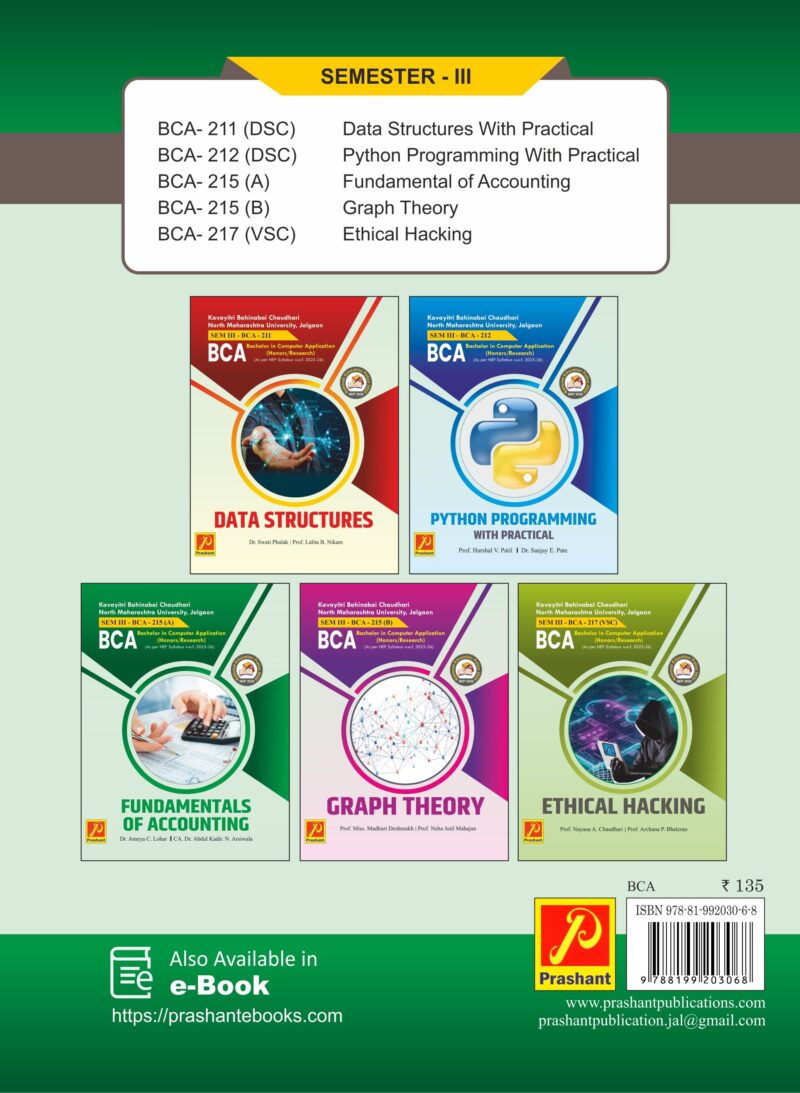
Fundamentals of Accounting
SEM III BCA-215 (A)
Authors:
ISBN:
Rs.135.00
- DESCRIPTION
- INDEX
The book Fundamentals of Accounting is written to provide students
with a clear understanding of the basic principles and procedures of
accounting, combining both theoretical and practical aspects. The first
unit, Introduction to Accounting, explains the concept of bookkeeping
and accounting, the distinction between the two, the scope of accounting,
its advantages and limitations, and identifies the users of accounting
information.
The second unit, Conceptual Framework, highlights the fundamental
accounting concepts and conventions, the role and benefits of accounting
standards, and introduces important accounting terms such as debtors,
creditors, bills receivable, bills payable, petty cash, contra entry, trade and
cash discounts, capital and revenue expenditure, and suspense account.
The third unit, Recording Transactions, focuses on the practical
application of accounting by covering types of accounts, golden rules
of accounting, and the accounting cycle. It also includes the preparation
of journals, ledgers, and trial balances with their meaning, format, and
significance.
The fourth unit, Final Accounts for Sole Proprietors, introduces
students to the preparation of final accounts, including trading account,
profit and loss account, and balance sheet, while explaining their objectives
and importance. This book aims to build a strong foundation for beginners
in accounting and to develop their ability to apply concepts in solving
practical accounting problems.
Special thanks to Prashant Publications, Director Shri. Rangrao Patil
and the entire team for their expedited and meticulous publication process.
We invite readers to share their valuable views, suggestions, and feedback
with us via email at dr.ameya.c.lohar@gmail.com and abdulkadirarsiwala@
gmail.com.
With Warm Regards,
UNIT – 1……………………………………………………………………………………………..7
Introduction to Accounting
1.1 Concept of Bookkeeping and Accounting
1.2 Distinguish between Bookkeeping and Accounting, Scope of Accounting
1.3 Advantages and Limitations of Accounting
1.4 Users of accounting information
UNIT – 2……………………………………………………………………………………………24
Conceptual Framework
2.1 Accounting Concepts and Conventions
2.2 Accounting Standards: Concept, Objectives and Benefits
2.3 Terms used in accounting: – Debtors, Creditors, Bill Receivable, Bills Payable, Petty cash, Contra
2.4 Entry, Trade Discount, Cash Discount, Capital and Revenue expenditure, Suspense A/c.
UNIT – 3……………………………………………………………………………………………36
Recording Transactions
3.1 Journal: Meaning, Specimen of Journal, Writing Journal Entries
3.2 Ledger : Meaning, Need and Contents of Ledger
3.3 Trial Balance: – Meaning, Specimen of Trial Balance, Utility of Trial Balance..
UNIT – 4……………………………………………………………………………………………75
Final Accounts for Sole Proprietors
4.1 Meaning, Objectives, and Importance of Final Accounts
4.2 Preparation of Trading Account, Profit & Loss Account, And Balance Sheet
4.3 Adjustment Entries for Closing Stock, Depreciation, Bad Debts & R.D.D., Outstanding Expenses, Prepaid Expenses, Accrued Income & Income Received in Advance.
Author
Related products
Practical Botany
Rs.65.00Plant Diversity
Rs.85.00Financial Accounting
Rs.225.00